

Be first to read the latest tech news, Industry Leader's Insights, and CIO interviews of medium and large enterprises exclusively from Retail Tech Insights
Retail Tech Insights: Specials Magazine
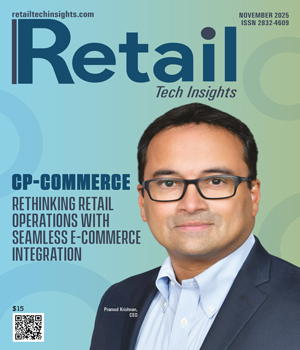
CP-Commerce
Rethinking Retail Operations with Seamless E-Commerce Integration
Success in modern retail comes from uniting traditional storefront operations and the digital marketplace. It streamlines workflows, simplifies management and drives growth for retailers. CP-Commerce is an expert in integrating e-commerce platforms with POS systems, synchronizing inventory, pricing and customer data across all sales channels. Its platform helps owners avoid manual work and maintain accurate, real-time insights to simplify everyday management. “We provide businesses a single, integrated platform that unifies online and in-store sales, eliminating the need to manage separate books of business,” says Pramod Krishnan, CEO. CP-Commerce was founded in 2018, building on its parent company’s—Computer SOS—25 years of e-commerce and POS systems experience. Its platform’s capabilities were best highlighted during the pandemic when small and medium enterprises (SMEs) were forced to adapt and shift to online sales channels despite limited digital readiness. Struggling to configure their business models, manage digital tools and maintain operations amid changing consumer habits and competitive pressures, they turned to CP-Commerce. The platform turned out to be the difference maker, enabling them to adopt digital transformation and remain competitive in the changing landscape. Today, it helps SMEs effortlessly expand nationally while maintaining real-time consistency in inventory and customer data by instantly syncing data across multiple locations. To facilitate confident scaling at minimal cost, CP-Commerce offers a flexible sales percentage-based pricing structure. Businesses in the retail sector, including pet care, gardening, school stores, hardware stores, museums and liquor, rely on CP-Commerce for its expertise. Unlike standard one-size-fitsall offerings, it provides high customization and personalized support that aligns solutions with each client’s specific business goals, fostering strong collaborations and driving long-term success. The platform’s robust security measures ensure data protection and compliance. These safeguards protect sensitive customer and transaction data, building trust and maintaining regulatory standards. To ensure clients experience the platform’s true benefits, it offers tailored support and a comprehensive set of digital marketing tools that plug directly into their ecosystem. These resources help monitor shifting market trends and consumer behaviors, making it easier to deliver targeted campaigns that matter. Search engine optimization capabilities enhance online presence, attracting new customers looking for relevant products.
In-store Retail
A robust, well-equipped team is key to delivering exceptional customer experiences in the retail sector. When frontline staff collaborate effectively, retail operations become streamlined and efficient. Equipped with the right tools and training, these teams do more than just sell; they build lasting customer connections. Enter Progress Retail A premier retail operations and workforce learning platform, Progress Retail focuses on elevating staff productivity and enabling exceptional customer service through comprehensive training and simplifying store operations. Built by retailers for retailers, the platform reflects Progress Retail’s CEO Raymond Riley’s hands-on experience working on the shop floor and in executive roles. “In my store days, we would have chaotic group chats that were used for everything, from visual merchandising execution to general store communications,” says Riley. “Progress Retail provides a purely retail-focused tool to effectively distribute and manage store training, tasks and communications.” Multi-location retailers, like Fleet Feet, Faherty Brand and Little Words Project, rely on Progress Retail to streamline task management and nurture effective communication. The all-in-one cloud platform offers engaging and dynamic training experiences that brands often struggle to deliver. Key features include intuitive task creation that automates recurring store expectations to save time and drive optimal execution. Multi-sensory, interactive training with smart quizzes and assessments guarantees that training is done right the very first time. Its AI-powered assistant enables teams to leverage internal knowledge bases and other data sources in a conversational format. Robust analytics provides actionable insights to improve outcomes. Designed for efficiency, Progress Retail ensures seamless navigation with advanced search tools and a retail-specific calendar to simplify planning and execution. Tailored notifications, including SMS, email and in-app alerts, can be customized by user role and notification category, enabling precise, context-aware communication across teams. “Our approach to product development is grounded in a deep understanding of the diverse personas that interact with workforce management software in retail environments,” says Riley. These insights have shaped the user experience and the underlying business logic, ensuring the product adapts to the operational realities of both small-chain and large-scale enterprises. By designing with scale and specificity in mind, it has built a solution that not only meets expectations but anticipates them.
Product Lifecycle Management

Every product on a retail shelf carries a story of compliance, innovation and consumer trust. Behind some of the most successful stories is Trace One, a premium SaaS product lifecycle management (PLM) and regulatory compliance software provider, enabling food and beverage, cosmetics and personal care, and specialty chemical brands and private label retailers to turn product ideas into successful launches. The company’s PLM platform unites the various stages of product development to help its clients deliver outcomes that meet consumer expectations and regulatory demands with speed and confidence. By combining compliance checks, collaboration tools and data-driven insights at every step, the platform streamlines the complex processes, whether it is formulating a sugar-free yogurt for diverse markets or designing sustainable packaging for a new snack line. “Every brand wants to communicate its values to consumers. We provide the tools to back up those claims with real data, so their messaging is credible and measurable,” says Antoine Daviet, Chief Product Officer at Trace One. Meeting the Needs of Manufacturers and Retailers Each sector Trace One serves presents unique challenges, and the platform is customizable to adapt to them. Manufacturers, primarily in food and beverages, cosmetics and specialty chemicals, use the PLM platform to connect marketing briefs with formulation tools, while ensuring compliance and facilitating innovation. Consequently, Trace One enables them to gain real-time insights that help assess raw materials against regulations, targets and nutritional claims, rather than relying purely on trial and error. As formulas are aligned with business goals before production, the platform captures and safeguards years of data, protecting every product’s intellectual property and institutional knowledge even when teams change. Private label retailers rely on Trace One to manage sourcing, supplier relationships, and product data for their private labels, offering them the scale required to compete on price, quality, and brand identity. The platform supports ESG goals by enabling sustainable packaging, supplier audits, and ethical sourcing compliance. More than meeting standards, Trace One helps brands communicate their sustainability and nutrition stories with credibility, strengthening consumer trust and deepening brand loyalty. Food service businesses, like restaurant and catering chains, also benefit from using Trace One. The platform gives them visibility into ingredients, suppliers and recipes at scale, ensuring menu items meet nutritional standards, labeling rules and customer expectations. A strong example of Trace One’s impact is its partnership with UNFI, a leading food and consumer goods company with 58 distribution centers across North America. To manage rapid growth and integrate more than 500 suppliers, UNFI partnered with Trace One to digitize its supply chain and standardize product data. By replacing legacy systems with Trace One PLM, the company improved compliance, accelerated product launches, and delivered greater transparency across sales, marketing, and supplier networks. Today, UNFI uses the platform as its gold standard to fuel growth and strengthen customer trust. In addition, Trace One PLM integrates with existing enterprise systems like ERP and CRM, ensuring cross-functional visibility and coordination across operations, marketing and R&D teams.
Retail AI

A Visionary in Retail Tech
Yang Lu, Chief Information & Digital Officer, Tapestry
E-Commerce

The Ecommerce Analytics Landscape: Wisdom in Three Quotes
Mathew Vermilyer, Sr. Director of eCommerce Analytics and Optimization, At Home Group Inc
E-Commerce

Behind the Scenes: The Unsung Heroes of Beauty - The Triumphs and Challenges of Contract Manufacturing in the Cosmetics Industry
Beata Lawson, Sr. Director of Global Manufacturing, Quality & Regulatory Compliance, Performance Beauty Group
E-Commerce

Transforming Stores into Customer Experiences
Alex Tallman, Senior Director, Retail Experience, Fleet Feet
E-Commerce

Retail Under Siege: Evolving Cyber Threats and What We Must Do Next
Mark Alvarado, Executive Director of IT Security & Compliance (CISO), Academy Sports + Outdoors

IN MY OPINION
E-Commerce
Leading with Purpose in Retail Pharmacy Operations
Fred Bencivengo, Senior Director, Retail Pharmacy Operations, Giant Eagle, Inc

LAST WORD
E-Commerce
Building a Scalable, Patient-Centered Compliance Program
Jennifer Motchnik, Manager of Pharmacy Adherence Packaging, Central Fill Pharmacy, RITE AID
IN FOCUS
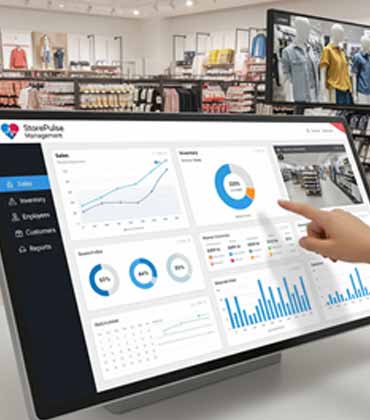
Strategic Rise of Retail Store Management Platforms
Retail store management platforms streamline operations, enhance customer experience, and integrate omnichannel capabilities, enabling retailers to thrive in an increasingly competitive digital-first marketplace.
Mastering Digital Commerce: The Power of Integration Strategies
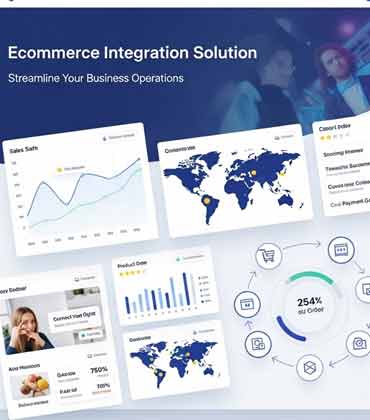
E-commerce integration enhances operational efficiency, improves customer experience, and enables scalable growth by connecting digital storefronts with core business systems in a seamless, data-driven environment.
EDITORIAL
Driving the Next Wave of Smart Commerce and Products
Unified eCommerce architecture is connecting online stores, marketplaces, POS systems and ERPs into a single ecosystem. This is ensuring real-time synchronization of inventory, pricing and customer data across all sales channels, enabling consistent shopping experiences. Use of AI-driven catalog management and API-first integrations is also rising, allowing retailers to automate product listings and personalize recommendations.
Retail store management platforms are evolving into intelligent, end-to-end retail operations hubs. Smart POS systems now integrate with CRM, loyalty programs and analytics engines to provide a 360-degree view of customer behavior. Computer vision and IoT-based footfall tracking are redefining in-store analytics by capturing customer movement patterns and optimizing shelf placement.
The focus of product lifecycle management (PLM) and compliance solutions is shifting toward sustainability-driven product intelligence. Cloud-based PLM systems now integrate environmental impact assessments and material traceability to help brands meet evolving ESG and regulatory standards. Digital twin technology is also gaining momentum, enabling real-time simulation of product performance and lifecycle costs before production.
This edition of Retail Tech Insights brings to light the recent developments in eCommerce integration, retail store management and the PLM and compliance arena and expert insights on these industries.
It features thought leadership articles from industry experts, including Mathew Vermilyer, sr. director of eCommerce analytics and optimization at At Home Group Inc., who discusses strategies for improving eCommerce analytics. Fred Bencivengo, senior director, retail pharmacy operations at Giant Eagle, Inc., shares insights into the developments in the retail industry.
We hope this edition featuring the most innovative and ground-breaking eCommerce integration solutions, retail store management platforms and PLM and compliance solution helps you sharpen your competitive edge in the world of retail, eCommerce and product management.
