

Retail executives face a mounting contradiction. Stores continue to reduce staffed checkout positions while losses from theft and process friction accelerate. Self-checkout was meant to restore efficiency, yet barcode-dependent workflows often slow transactions, frustrate shoppers and expose retailers to well-known shrink tactics. Cameras are already present across the store, but most visual systems remain limited by heavy infrastructure demands, narrow product coverage or reliance on cloud processing that raises cost and latency concerns. The result is a category of solutions that promise intelligence yet struggle to scale cleanly across diverse store environments.
Be first to read the latest tech news, Industry Leader's Insights, and CIO interviews of medium and large enterprises exclusively from Retail Tech Insights
Top AI Powered Retail Computer Vision Solutions 2026
AI Powered Retail Computer Vision Solutions use video analytics, and image recognition to monitor in-store activity, shopper behavior, inventory movement, and operational performance. These platforms help retailers improve loss prevention, optimize merchandising, automate checkout experiences, enhance customer insights, and increase operational efficiency through real-time visual intelligence and data-driven automation.
Insights

Little Swaps
Little Swaps, Larger Purpose: How Two Moms Are Using AI to Rebuild Community
Claudia de la Guerra and Monica Leesha, Co-Founders
Build From a Frustration Every Parent Knows
Solutions
UltronAI
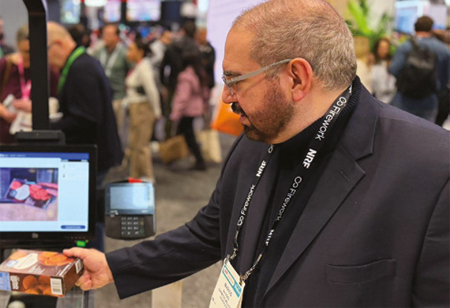
Seeing Products, Not Behavior
Marios Savvides, CEO
For years, retail computer vision tried to understand shoppers by watching what they did. Systems tracked hands, motion, and behavior, hoping to infer whether an item was scanned, missed, or intentionally skipped. It was an imperfect solution to a structural problem. Behavior is ambiguous. Products are not.
Deep Dive
Leadership Perspective

The Tile Shop
Enhancing POS Experience for Employee and Customer is the Key to Success
Christopher Davis, Chief Information Officer
Christopher Davis has around three decades of experience in the industry, introducing numerous solutions and capabilities and replacing legacy systems. He began his career at PricewaterhouseCoopers (PwC) Consulting—owned by IBM Global Services—as a senior consultant after graduating in computer science from Brigham Young University. Being responsible for ERP transformation, he spent ten years at IBM implementing SAP solutions across the U.S. and globally. Later, he worked for various organizations such as Maytag, Whirlpool Corporation, Sleep Number Corporation, and Express Oil Change & Tire Engineers, leading IT teams and helping to rebuild their IT capabilities. Recently, Davis joined as a CIO at The Tile Shop, where he is enabling the company to undergo a significant technological, cultural, and organizational transformation, dealing with people, processes, and technology.
