
There's a moment that happens at every Little Swaps event that I've never been able to fully capture in a product spec. A parent picks up a pair of barely-worn rain boots, turns them over in their hands, and says - to no one in particular—"These are perfect. My daughter is going to love these." The mom who brought them smiles like she knows. That exchange, wordless and warm, is everything we're building toward.
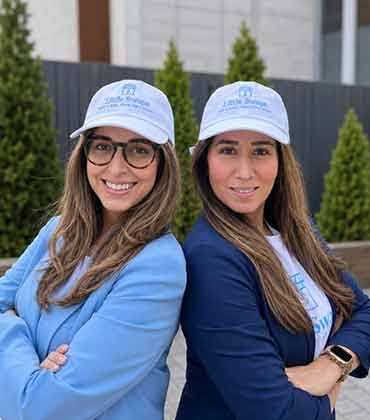
Little Swaps started from a simple frustration: children's items have some of the shortest use cycles of anything we own, yet we keep buying them new. A snowsuit worn for one season. A baby carrier used for six months. A wooden toy that captured a child's attention for exactly three weeks. The waste is staggering - but the solution already exists in every neighborhood. Parents have things to give. Other parents need them. As two moms who lived this firsthand, we knew we just hadn't made it easy enough to connect. So we built it. Little Swaps is our answer - infrastructure for the mom economy, the vast and underserved network of parents making smart, values-driven decisions for their families every single day.
AI Removes Friction Community Does the Rest
Technology is central to how Little Swaps operates, not as the hero of the story, but as the quiet infrastructure underneath it.
Friction is the enemy of community. Parents are time-poor. If listing an item takes too long, it doesn't get listed. If arranging a pickup feels uncertain or awkward, the deal falls through. So we've used AI selectively but purposefully - to reduce those small moments of hesitation that quietly kill participation.
Our AI-assisted listing tool is a good example. A parent can photograph an item and get a suggested title, condition description, and price range based on similar sold items—in seconds. What used to take five minutes of typing now takes one. It sounds like a small thing. It isn't. Multiply that across thousands of listings and you start to see how much activation energy AI can quietly remove from a marketplace.
AI also helps power smarter matching-surfacing items to parents based on the ages of their children, their location, and their past browsing behavior. This isn't Amazon-style recommendation logic built to maximize clicks. It's closer to what a knowledgeable friend might say: "Hey, someone nearby just listed exactly what you've been looking for." The difference in intent shapes everything about how we've tuned it.
But here's what we keep coming back to: AI is genuinely powerful at pattern recognition, reducing friction and surfacing the right information at the right moment. What it can't do—and what we don't want it to try–is manufacture belonging. That part is stubbornly, beautifully human.
Our swap events, hosted in partnership with local businesses and community spaces, have become the heartbeat of Little Swaps. When people meet face-to-face, trust forms quickly. And that trust doesn't stay offline - it migrates onto the platform. Parents who attend even one event
are measurably more active, more generous in their listings, more likely to refer friends. So we use platform data to inform where we host next: which neighborhoods are growing fastest, where there are clusters of users who haven't yet met each other. The digital and the physical are in constant conversation.
There's a broader principle that gets lost in a lot of AI conversations: technology works best when it's designed around the grain of human behavior rather than against it. Parents don't want to become power users of another app. They want their kid to have winter boots by Thursday.
They want to feel like they're part of something that makes their neighborhood a little more connected. AI helps us deliver the first part efficiently. Community is what makes them stay for the second.
What we're really building - underneath the listings and the logistics and the recommendation engine - is trust at scale. Between strangers, between families, between generations of children who will never know they shared the same beloved toys. Today, parents in nearly 40 states are buying and selling on Little Swaps, thousands of items have found second lives, and more than 750 mom-owned businesses have joined our directory - not as sponsors, but as neighbors. That directory is the circle closing: when families save money by swapping, we want them to reinvest it locally, in the businesses that make their communities worth living in.
AI is the engine powering all of it - quietly, efficiently, in the background. But the village we're building? That belongs to the people showing up, handing things over, and walking away a little lighter. We're just getting started.