


Retailers have strong data on what's been ordered, what's been received, and what's been scanned at checkout. What they largely lack is reliable, real-time data on what's actually on the shelf—right now, in this store, on this aisle—and whether it bears any resemblance to the painstakingly developed planogram.
The choreography that goes into a retail shelf is easy to underestimate. Retailers and their brand and manufacturer partners spend months aligning on planograms, promotional displays, assortment decisions, and pricing, all in service of a shelf that's full, compliant, and driving sales.
But if there's no fast and reliable way to verify what's actually on the shelf, that planning exists in a vacuum.
The reality on the ground is messier than most conversations in the C-suite acknowledge. End cap displays are merchandised incorrectly, or don't get set at all. Products sit in the back room while the shelf sits empty. Associates, under pressure to keep shelves looking full, sometimes pull the price tag on an out-of-stock item and fill the gap with something else—a quick fix that corrupts planogram data and creates a downstream spiral of bad information.
The issue is so pervasive that it's not uncommon for senior retail executives to walk into one of their own stores (on a personal shopping trip) and discover execution failures that should have been caught days or weeks earlier. They take pictures and send them to their team, which sends ripples down the chain of command and leads to a frenzy of action. But it shouldn't take a chance store visit from an executive to surface problems that frontline teams walk past every day.
The Shelf Is Retail’s Biggest Blind Spot
The deeper issue is that retail decisions are routinely made on the basis of assumed execution, not actual execution: When the data is bad, the decisions that follow are, too.
This is where AI image recognition enters the picture.
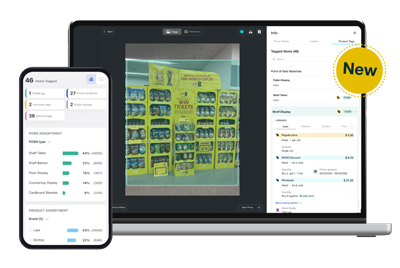
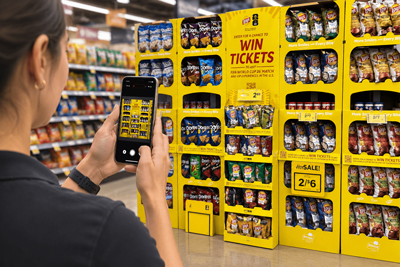
In practice, the technology is more intuitive than it might sound. A store associate or field rep moves through the store with a mobile device, holding it up as they walk the aisle. As they scan, the device’s camera captures the shelf in real time using augmented reality. Computer vision identifies each product and surfaces data on placement, availability, and compliance. There’s no manual photo capture, no stitching together individual images. The system builds a complete picture of the shelf as the associate moves down the aisle.
The software then compares the picture against the planogram and produces a “realogram,” which identifies discrepancies immediately. A product in the wrong location, a void where inventory should be, a promotional display that doesn't match the agreed setup—all of it is flagged for the associate to review and take corrective action in real time - leading to full shelves and fuller baskets.
The technology works across the full store, including perishables like produce and meat. And in departments where planograms are meticulously set to mitigate spoilage and drive more center plate purchases, real-time shelf data makes a material difference in both sales volume and known shrink.
Visibility alone, however, isn’t the breakthrough. Plenty of retail technology generates data that travels up the chain, is reviewed in a weekly report, and informs a decision that arrives back at store level days later—long after the moment to take corrective action has passed.
AI image recognition has changed where the resolution happens. It doesn’t happen at headquarters or at the regional level; it happens in the aisle, in real time.
Previously, a store associate might notice an out-of-stock, pull the price tag to conceal the gap, intend to flag it later, and then get pulled into something else. By the time a brand rep visits and finds the shelf isn’t properly executed, the situation has escalated.
Now, when a void is detected, the associate receives a prompt on their device: Check backroom inventory. If stock is there, bring it out. If it isn’t, note it. That information is captured, documented, and reportable upstream.
When a product is misplaced, the associate is given a directive immediately: Move it. When a display doesn't match the planogram, the associate can see exactly what the shelf should look like and fix it on the spot. And because the process is guided, a newer employee working through it for the first time can perform to the same standard as a long-tenured one. The store walk becomes standardized. The right checks happen in the right stores at the right frequency. And critically, once execution is documented and reportable, it becomes something that can be enforced, benchmarked, and improved over time.
All of this matters because the shelf is not an operational concern. The relationship between on-shelf availability and sales is well established: A 2 percent reduction in out-of-stocks, according to ECR, corresponds to a roughly 1 percent increase in sales. But the commercial impact runs deeper than a single metric.
According to a 2026 Retail Economics and DHL report, around one in five grocery trips in the UK involves an out-of-stock item—translating to roughly 930 million shopping visits a year where a customer can’t find what they came for, and £2.1 billion in sales either lost or displaced to competitors. For individual shoppers, the frustration compounds quickly. At first they’ll consider alternatives like a different brand or related item, but when they encounter out-of-stocks repeatedly, it causes them to shop elsewhere, impacting customer loyalty.
The Future of Shelf Intelligence
AI models are becoming faster, more accurate, and easier to deploy at scale. Digital twins now allow tens of thousands of products to be trained in days rather than months, dramatically lowering the barrier for retailers and brands that want to get up and running quickly. The capture methods are becoming more fluid, and the data sets are getting richer.
But perhaps the most significant shift is in what retailers will be able to do with the data AI produces.
Today, AI image recognition answers a relatively straightforward question: “What’s on the shelf?” As shelf data becomes integrated with inventory data and point-of-sale data, the question will become: “What should be on the shelf—and why?”
The implications are significant. Instead of designing a planogram based on historical assumptions and category expertise, a retailer can query a complete, real-time picture of shelf performance, inventory flow, and sales data and ask genuinely intelligent questions. What product mix would perform better for this store’s demographic? Which of these two promotional display formats is more likely to drive stronger sales in this retailer? Where are the gaps between what we planned and what's actually selling? And what should we do about them?
Retailers have always had strong instincts about their shelves. What they've lacked is the data to validate those instincts—or to know when they're wrong. That's changing. And as it does, the conversation is shifting from “What happened on the shelf?” to the far more valuable question: “What should we do next?”
Kalliopi Vlastos is Vice President of Sales at GoSpotCheck by FORM (https://www.form.com/), where she leads North American revenue and go-to-market strategy for the company’s AI-powered retail execution platform. With 14 years of B2B SaaS sales leadership experience, she has held leadership roles at companies including GoCanvas and Youreka, working closely with retailers, CPG brands, and the Salesforce ecosystem. Connect with her on LinkedIn at @kalliopivlastos.