

Be first to read the latest tech news, Industry Leader's Insights, and CIO interviews of medium and large enterprises exclusively from Retail Tech Insights
A featured contribution from Leadership Perspectives: a curated forum reserved for leaders nominated by our subscribers and vetted by the Retail Tech Insights Advisory Board.

Paradies Lagardère
Leading Impactful Technological Innovation in Retail
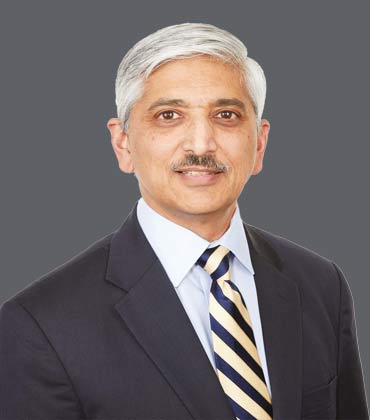
Malcolm D’Souza
Malcolm D’Souza is a seasoned IT executive with over three decades of experience in various sectors, including government, financial and grocery retail. He has held numerous positions in IT, each with increasing scope and responsibility. Currently, he is the vice president of enterprise technical services at Paradies Lagardère.
In an interview with Retail Tech Insights, D’Souza shared insights on his career trajectory, roles and responsibilities, industry trends and challenges. He also highlighted strategies for building responsive and supportive teams to overcome barriers to business success.
Guiding Technological Advancement with Purpose
I’ve worked in IT for the better part of four decades. I started as a junior technician in the public sector, helping agencies adopt new technologies in the mid-90s when personal computers were just emerging. That experience taught me how to make technology useful and accessible.
I found my career path in grocery retail, spending three decades with a major supermarket chain in the Northeast. I began by supporting store systems, introducing email, local networks and productivity tools. I also led service delivery teams focused on stability and root cause analysis before moving into enterprise architecture to shape long-term strategy.
In the office of the CIO, I managed financial systems and communications and led large supply chain projects that involved insourcing and taking over large warehouses. Despite never writing code, I’ve guided development teams and worked across infrastructure and business functions to deliver results. My focus has always been on connecting technology to real-world impact.
Navigating Challenges with a Customer-First Approach
My view on technology has evolved during my career. In retail, I learned that most customers don’t see the depth of systems behind their experience. Years ago, we focused on improving that experience through innovations like scan-and-go shopping, mobile payments and tools that made visits faster and more convenient.
“Every IT decision must be anchored in a business case. Lifecycle replacements, security and regulatory compliance are non-negotiable. Genuine business needs must drive new projects”
Technology only works when it’s grounded in understanding the customer. You need to know what they want, ensure it’s available and offer support when needed. The same principle applies to travel retail, even though the customer is different and airport shoppers are transient. They’re in and out quickly and may never return to the same location. If we don’t anchor decisions in those answers, we risk chasing trends that don’t serve the business. Relevance and service must guide every innovation we bring to the terminal.
Empowering Businesses through Unique Tech Solutions
Every IT decision must be anchored in a business case. Lifecycle replacements, security and regulatory compliance are non-negotiable. Genuine business needs must drive new projects. IT shouldn’t guess what the business wants. We need to think like operators and not technologists.
I’ve been encouraging my teams to shift their mindset. They should consider what they would need to run a store better, faster and more efficiently if it were their own. This helps make more intelligent choices and build stronger relationships across finance, merchandising, marketing, and other lines of business.
At the field level, store managers care about results. They want tools that help them sell, not systems that slow them down. If a solution doesn’t improve productivity or drive sales, it’s not worth pursuing. That’s the standard we should uphold in everyday operations.
Mobile Technology that Enhances Retail Experiences
While traditional POS systems still serve a purpose, today’s shoppers, especially the younger generation, expect speed and convenience. Mobile technology has become central to the retail experience, especially post-COVID. Mobile devices let shoppers scan products, compare prices, check nutrition facts and even pay without interacting with store staff. During the pandemic, mobile adoption surged, and this continues to be the pattern today. I used to avoid online shopping, but now it’s my default.
In grocery retail, we introduced apps that allowed customers to scan and bag items as they shopped, then pay directly through their phones. Whether it’s POS or mobile, the goal is to make shopping frictionless. We must keep enhancing these experiences to meet customers where they are and bring the best of traditional retail into the digital space.
Leading with Business Clarity and Team Strength
From a leadership standpoint, I firmly believe IT must operate as a business. Every decision should be anchored in a clear business need. Whether building software or supporting retail operations, the focus must be on solving real problems and not chasing trends. Innovation should be purposeful. If a new technology doesn’t address a pain point or unlock meaningful capabilities, it’s not worth pursuing.
Equally important is building the right team. Success depends on having collaborative, open-minded people who feel safe sharing ideas and feedback. Leadership is a two-way street, and I’ve had great mentors who taught me that a leader’s success is inseparable from the team’s success. No matter how skilled you are, you won’t thrive without a strong, engaged team behind you. Creating that environment is one of the most important things a leader can do.
