

Be first to read the latest tech news, Industry Leader's Insights, and CIO interviews of medium and large enterprises exclusively from Retail Tech Insights

Jesus Mathus
Embracing Innovation for Grocery Growth
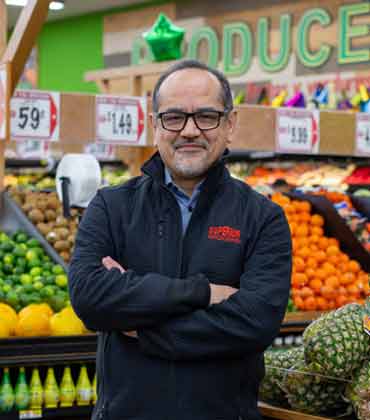
As a transformational executive and CIO, Jesus Mathus has spent decades at the intersection of retail technology, digital transformation, and supply chain management. With a proven track record across privately held, private equity-backed, and public companies, Mathus has driven profitability and efficiency through targeted technology investments. His expertise spans CRM, business intelligence, and Supply Chain, which he uses to enhance customer experiences and optimize operations.
Mathus is also known for his successful leadership in post-acquisition integrations, system streamlining, and cost reduction. Fluent in English and Spanish, he fosters collaboration across global teams, ensuring agility in an ever-evolving market.
From Specialty Stores to Grocery Giants
For nearly 30 years, I’ve immersed myself in retail technology, starting in specialty stores like PetsMart, where I learned the industry’s fundamentals. My journey continued through department stores, including JCPenney, during a time in which the company was engaged in a major realignment of their business. Over the last 15 years, I’ve focused on the grocery sector, working for several leading Hispanic grocers until joining the incredible team at Superior Grocers. In the highly competitive grocery business, my experience has given me the opportunity to lead strategic technology investments that maximize efficiency and drive impact.
“We anticipate AI will reshape our supply chain management through advanced forecasting tools that consider complexities like halo and cannibalization effects”
As a CIO, understanding the business is as critical as understanding the technology. It’s not about adopting every new tool—it’s about making the right, data-driven choices that lead to measurable results. Joining Superior Grocers has given me the chance to apply that knowledge accumulated throughout my career to make a meaningful impact, and that’s why I’m excited to be here today.
Driving Growth and Innovation at Superior
My journey in the grocery sector began with Grupo Chedraui USA, where I played a key role in implementing IT infrastructure that supported the company’s rapid growth. This experience taught me the importance of building scalable infrastructure from the ground up.
When I joined Superior, the company faced a similar challenge: modernizing its core infrastructure. At that time, Superior needed to invest in key technology areas, especially applications. To address this, we launched a multi-year program to replace all core merchandising, supply chain, and operations systems. Our partnership with Oracle, which now provides our ERP system and AI-powered applications, has been instrumental in gaining a competitive edge and driving innovation. These investments will continue to shape Superior’s growth for years to come.
Embracing Omnichannel and E-Commerce
Like many in our industry, Superior Grocers was initially slow to adopt omnichannel strategies. However, the pandemic forced a shift in our approach. Instead of launching our online store, we forged partnerships with distributors like Instacart, DoorDash, and Uber Eats. Through these partnerships our collaboration has successfully attracted new customers and reached demographics previously outside our typical customer base. Instacart, for example, has enhanced our product availability, expanding our footprint through third-party platforms.
In addition to these partnerships, we launched a mobile app, which has far exceeded our expectations. The app is now a next-generation loyalty program, offering customers special pricing, deals, and digital coupons. This modern, cost-effective tool has not only bypassed the need for traditional loyalty cards but has also helped us retain customers by providing an engaging and personalized experience.
Embracing AI and Robotics: Shaping the Future of Grocery
AI is revolutionizing industries, and grocery retail is no exception. While we approach AI investments carefully, its potential to transform grocery operations is undeniable. We anticipate AI will reshape our supply chain management through advanced forecasting tools that consider complexities like halo and cannibalization effects. These engines provide more accurate, actionable data, helping us make smarter business decisions.
Video recognition is another promising area where AI is making a difference. By combining AI with advanced video systems, we can detect hazards, prevent theft, and enhance store security. While these technologies are still evolving, they hold the potential to redefine how we approach safety and loss prevention in grocery stores.
Another technology we anticipate being significantly impactful is Robotics. Although not new, robotics are becoming more cost-effective and multifunctional. Soon, robots that clean, scan for inventory gaps, and perform other tasks will be integral to our stores. Their affordability and functionality could make them a key investment for Superior in the coming years.
Navigating Market Trends and Business Challenges with Technology
As we evaluate new technology, we focus on solving key business challenges. The grocery sector is undergoing significant changes, and our IT strategy must evolve to keep pace.
One major trend is healthier living. Grocers must adjust their assortments to meet customer demand for more nutritious options, especially in categories such as meat, produce, and prepared foods. Technology helps us evaluate formulas and optimize in-store production to meet these evolving preferences.
Another key trend is the increasing importance of a cohesive omnichannel strategy. Today’s consumers are well informed, technology savvy, and demand high levels of service in all commercial channels. Hyper-personalization is also at the forefront of our efforts, with our mobile app enabling us to create micro-campaigns tailored to specific customer segments. Real-time inventory across all channels is a long-term goal, and we’re working hard to make this a reality. AI will continue to open new possibilities to enhance this personalization further.
Lastly, the trend of downsizing grocery stores requires us to rethink how we maximize sales per square foot and improve operational efficiency. Smaller store formats require technology that can support these new models, and we’re leveraging analytics to ensure we’re optimizing every inch of retail space.
These megatrends are reshaping the grocery industry, and our IT strategy must evolve to stay ahead.
